Quick Summary
- A website redesign case study in Egypt should show more than a visual before-and-after. The useful proof is how the rebuild improves information architecture, mobile UX, crawlability, project discovery, content ownership, performance, and conversion paths.
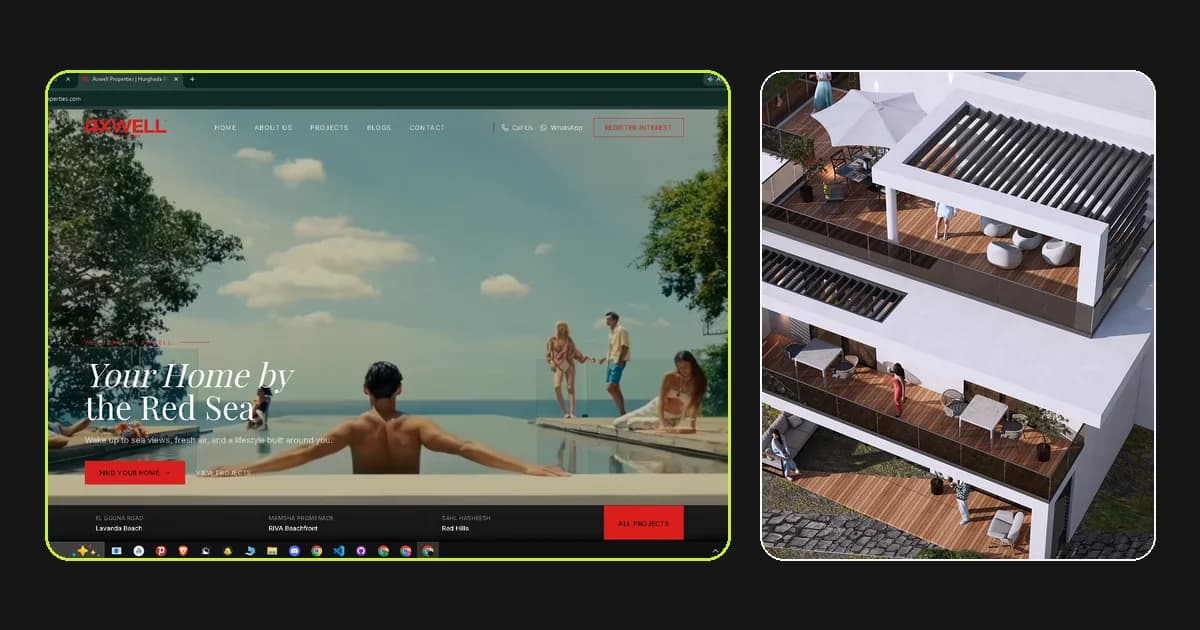
- The Axwell Properties live website is publicly credited to IDEONIC Solutions and provides a current implementation example. Kronberg adds a second real-estate project context supplied for the showcase.
- This page owns redesign-proof intent only. Web Design Company in Egypt continues to own provider-selection queries, while Website Development Cost in Egypt owns pricing intent.
- No fabricated conversion-rate, revenue, or speed-improvement percentages are used because those before/after measurements were not supplied.
Quick Answer: What Should a Website Redesign Actually Change?
A serious redesign should improve the way the website works as a business system, not only the way it looks. That means clearer page ownership, easier navigation, stronger mobile layouts, better content hierarchy, crawlable commercial information, more intentional internal links, cleaner conversion paths, and a technical foundation that is easier to maintain and optimize.
| Area | Cosmetic redesign | Performance-minded rebuild |
|---|---|---|
| Visual identity | New colors, fonts and imagery | Visual system tied to brand hierarchy, readability and CTA priority |
| Navigation | Menu restyled | User journeys reorganized around actual tasks and high-value pages |
| SEO | Metadata added after design | Search intent, URL ownership, internal links and crawlability planned with the structure |
| Mobile | Desktop sections stacked | Layouts redesigned for thumb reach, reading order, speed and conversion |
| Conversion | More buttons | Fewer, clearer actions matched to the visitor's stage |
| Measurement | Launch and move on | Analytics/Search Console used to improve pages after launch |
Live Example: Axwell Properties
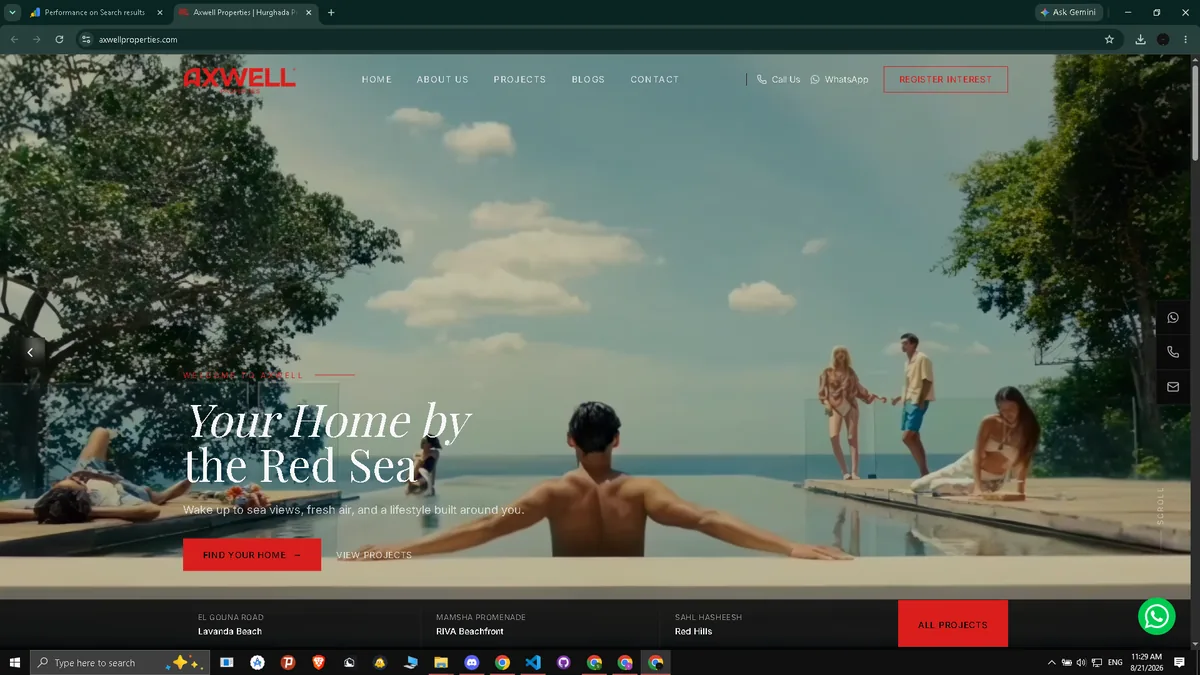
The Axwell homepage demonstrates a key redesign principle: a premium visual experience still needs to move buyers into meaningful project discovery. The site gives users routes into latest projects, featured developments, Red Sea locations, the Soma Bay collection, company context, and contact actions instead of treating the homepage as one long visual brochure.
The live footer credits IDEONIC Solutions as developer. For a deeper breakdown of the project and its supplied Search Console evidence, use the Axwell Properties case study.
SEO During a Redesign: Protect Existing Signals Before Chasing New Ones
- 01
Inventory existing URLs
Before changing routes, identify pages that already earn impressions, clicks, links, or conversions. A redesign should not casually delete accumulated search equity.
- 02
Define one owner per intent
Map the commercial and informational queries to one primary page each. This prevents the new design from multiplying near-duplicate pages.
- 03
Preserve or redirect valuable URLs
When routes must change, implement intentional redirects and update internal links, canonicals, sitemap entries, and navigation.
- 04
Rebuild metadata and content around the new architecture
Titles and headings should describe what the page actually owns; they should not all target the same broad service phrase.
- 05
Measure after launch
Watch crawl errors, indexing, impressions, rankings, and CTR so migration problems are caught early.
For provider-selection intent, use the web design company in Egypt guide. For budgeting, use the website development cost in Egypt guide. This case-study page stays focused on redesign evidence and implementation decisions.
Conversion Design: Help the Right Visitor Take the Next Step
Research-stage visitor
Needs useful project, service, location, or educational content before a contact request makes sense.
Comparison-stage visitor
Needs proof, differentiation, process, project examples, FAQs, and clear links to the right commercial page.
Decision-stage visitor
Needs a visible call, WhatsApp, form, booking, or quote action with enough context to feel safe taking it.
Returning visitor
Needs recognizable navigation and stable page structure so they can quickly find the project or information they viewed before.
A redesign that adds more animation but makes those journeys harder is not a conversion improvement. The goal is to reduce ambiguity while preserving the brand experience.
Website Redesign Checklist for an Egyptian Business
- ✓List the pages currently generating impressions, clicks, enquiries, sales, or backlinks before changing URLs.
- ✓Define the new site map around user tasks and query ownership, not only departments in the company org chart.
- ✓Confirm canonical domain strategy, redirects, metadata, sitemap, robots behavior, and schema before launch.
- ✓Use responsive image formats and set dimensions to reduce layout shift and oversized downloads.
- ✓Test forms, WhatsApp, phone, email, and booking routes on mobile devices.
- ✓Check heading hierarchy, contrast, keyboard navigation, and readable text sizes.
- ✓Submit the new sitemap and inspect the most important changed URLs in Search Console after deployment.
- ✓Compare performance over time rather than judging the redesign only on launch-day appearance.
Redesign Migration QA: The Checks That Protect Search Visibility
A redesign is one of the easiest moments to lose existing SEO value because many changes happen at once. URLs move, headings change, copy is shortened, navigation is rebuilt, images are replaced, and scripts or frameworks can change. The launch plan therefore needs a migration checklist that is separate from visual QA. A page can look perfect while returning the wrong canonical, dropping a redirect, hiding content from crawlers, or removing the internal links that previously supported it.
- ✓Crawl the old site and preserve a URL inventory before deployment.
- ✓Map every changed valuable URL to its correct destination and avoid redirect chains.
- ✓Confirm self-referencing canonicals and the preferred www/non-www domain strategy.
- ✓Verify title, description, H1, structured data, and robots directives on priority pages.
- ✓Check that navigation and contextual internal links point directly to final URLs.
- ✓Confirm responsive image sizes, dimensions, alt text, and loading behavior.
- ✓Run mobile form and CTA tests and verify analytics or conversion events where configured.
- ✓Submit the updated sitemap and monitor indexing, crawl errors, impressions, and priority URLs after launch.
The safest redesign treats SEO preservation as a release requirement rather than a marketing task scheduled for later. That mindset is especially important on sites that already have Search Console impressions: there is existing search equity to protect before the team tries to create new growth.
Frequently Asked Questions
What should I look for in a website redesign case study in Egypt?+
Look for a live project, the business problem, information-architecture decisions, mobile and conversion improvements, SEO migration handling, and evidence that can be inspected. Avoid case studies that show only a polished screenshot while hiding whether URLs, content, forms, performance, or search visibility were considered.
Will redesigning my website hurt SEO?+
It can if valuable URLs are removed, internal links break, content is reduced, redirects are missing, metadata changes carelessly, or important pages become harder to crawl. A properly planned redesign inventories existing search signals first and treats redirects, canonicals, content ownership, sitemap updates, and post-launch monitoring as part of the build.
Is this page competing with IDEONIC's web design company page?+
No. This page owns proof and redesign-case-study intent. The web design company page owns provider-selection queries, while the website development cost page owns pricing. The pages link to one another so users and search engines can move between evidence, service scope, and budget without multiple URLs fighting for the same phrase.
Can you guarantee that a redesign will increase leads?+
No. A redesign can improve usability, clarity, search foundations, and conversion paths, but lead volume also depends on traffic quality, demand, offer strength, pricing, competition, sales follow-up, and measurement. A responsible case study should explain the improvements made without inventing or guaranteeing commercial outcomes that were not verified.
Final Takeaway
A useful website redesign case study in Egypt explains what changed beneath the visual layer. Information architecture, SEO migration, responsive performance, content ownership, project discovery, and conversion paths determine whether the rebuilt site becomes a stronger business asset or simply a prettier version of the same problems.
If you are comparing development partners, continue to Web Design Company in Egypt. If you need budget guidance, use Website Development Cost in Egypt. For verified project examples, return to the case-studies pillar.